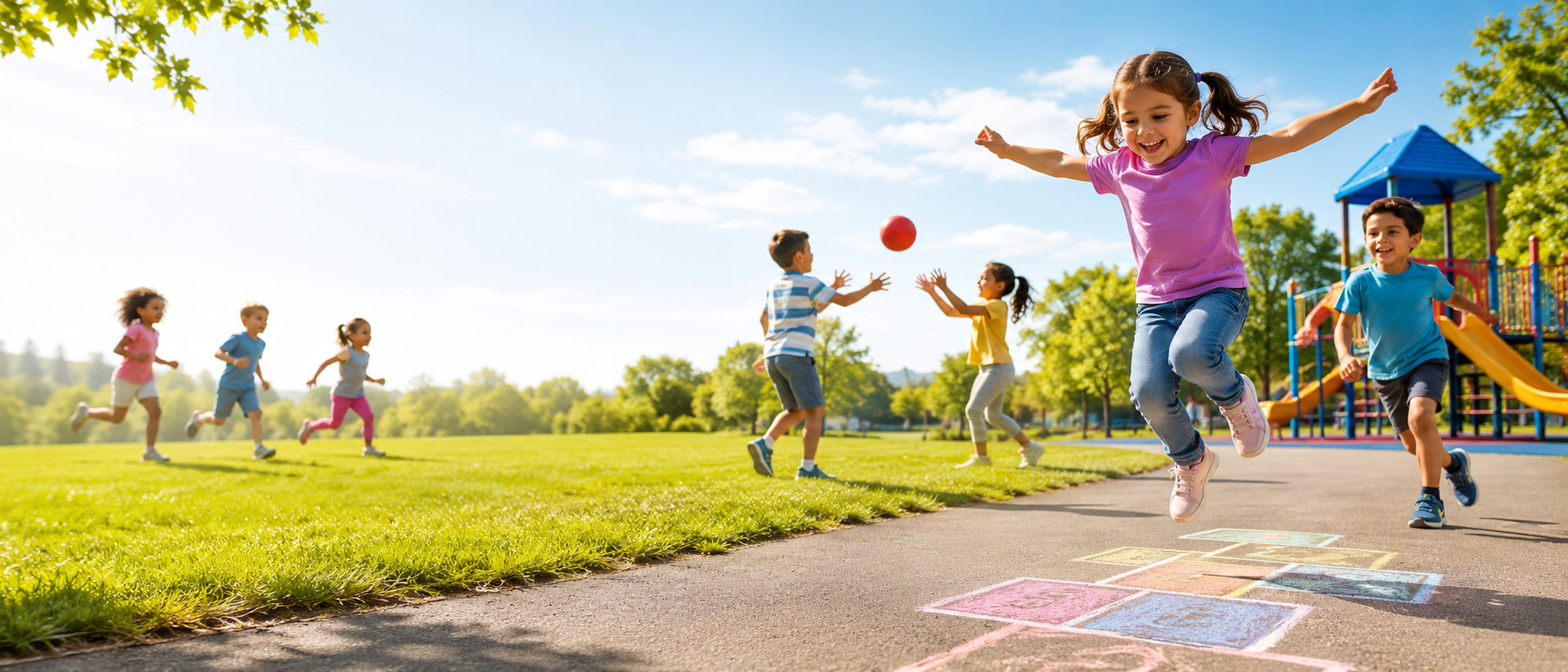

In today’s digital age, it’s easy for children to spend more time indoors and in front of screens than ever before. While technology has its benefits, it can also reduce the time kids spend moving, exploring, and engaging in physical activity.
This is where active games come in—a fun, engaging, and essential way for children to stay healthy, develop coordination, and strengthen social skills.
Active games are any games or activities that require physical movement. These can range from outdoor playground activities to indoor movement games, organized sports, or family-friendly fitness challenges.
The beauty of active games is that they combine fun with fitness, making physical activity something children look forward to instead of seeing it as a chore.
Physical activity is crucial for a child’s development. Children should be encouraged to enjoy regular physical activity each day. Active games are a great way to support this because they offer the following benefits:
Active games improve cardiovascular fitness, muscle strength, flexibility, and bone health. Running, jumping, climbing, and balancing are all forms of natural exercise that help children develop strong and healthy bodies.
Physical activity can help reduce stress, anxiety, and behavioral challenges in children. Active games stimulate the release of endorphins, improving mood and helping children feel happier and more confident.
Many active games require teamwork, communication, and cooperation. Games such as tag, relay races, and group obstacle courses teach children to work together, follow rules, and respect their peers.
Active games often require strategy, problem-solving, and quick thinking. Sports and movement games can help children develop concentration, spatial awareness, and decision-making skills.
Children who enjoy active games are more likely to remain active as they grow. Making movement fun from an early age can help establish lifelong healthy habits.
There are countless ways to get kids moving. Active games can be adapted for different ages, abilities, interests, and environments.
Outdoor games allow children to explore nature while staying physically active.
Even when the weather is not ideal, children can stay active indoors.
Sports provide a structured way to incorporate physical activity through rules, goals, and friendly competition.
Active games can involve the entire family, turning physical activity into a fun bonding experience.
Active games offer many benefits beyond physical health.
Here are some simple ways to make active games a regular part of your child’s routine:
Children are more likely to participate in activities they enjoy. Introduce games that are colorful, imaginative, and engaging.
Encourage daily movement by setting aside a regular time for active play, whether indoors or outdoors.
Simple items such as balls, jump ropes, cones, hoops, or a safe open space can make active games more exciting.
Children love it when parents participate. Join them in games of tag, races, dance challenges, or obstacle courses to keep them motivated.
Adjust the rules, complexity, and physical demands of each game based on the child’s age, abilities, and skill level.
Praise effort, creativity, teamwork, and participation—not just winning. The goal is to help children stay active, enjoy themselves, and build new skills.
Active games are essential tools for raising healthy, happy, and confident children. They combine movement, fun, learning, and social interaction in ways that screen time cannot replace.
From outdoor playground adventures and indoor movement games to sports and family-friendly challenges, there are endless opportunities to keep children active and engaged.
By making active play a regular and enjoyable part of family life, parents can help children build healthy habits that may last a lifetime.
